
Author: James Harleman
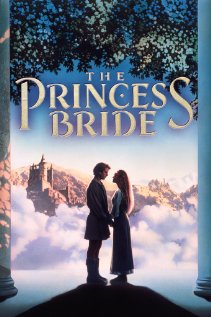 I asked our readers what I should watch (and review) for Valentine’s Day, and The Princess Bride was suggested. Some people in my college dorm watched the film back in 1991 ad nauseum and put a bad taste in my mouth for this 1987 Rob Reiner movie, but the reality remains that the fanciful film is an enduring classic for men and women, boys and girls of all ages in all ages. Examining the narrative, is it any wonder why?
“It was the book my father used to read to me when I was sick, and I used to read it to your father. And today I’m gonna read it to you.”
As the story opens with a jaded, video-game playing grandson irritated by his grandpa’s visit, the romantic notion that there is a story told by father to son, generation to generation, one being passed down that is about “true love” either makes us roll our eyes or warms our heart. Would that there might be a story worth teaching “diligently to your children, and shall talk of them when you sit in your house, and when you walk by the way, and when you lie down, and when you rise” – Deuteronomy 6. Maybe it might even be a story that, as the grandfather promises, contains “fighting, torture, revenge, giants, monsters, chases, escapes, true love, miracles…”
“You’re never going to get these people to see themselves as they really are, ’cause it’s the lies that we tell ourselves… they introduce us to him.”
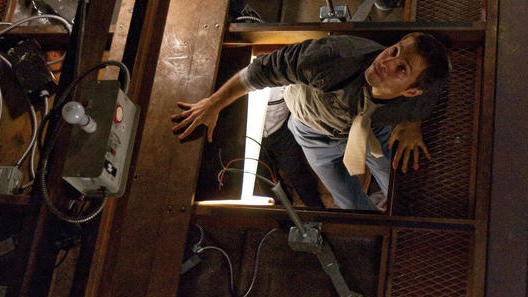 Is a movie called Devil automatically evil? Can it actually provoke conversation about his existence, and God’s ultimate authority and triumph over his schemes? In our first post about this film, we featured a segment on scary movies more generally, and how they play an important part in storytelling. Now we dig in deeper to this particular film with the second segment, which is best listened to after you’ve seen the film and contains spoilers…
 Is the Devil real? Does he have power over us? A PG-13 film that captures the spirit of old stories like The Twilight Zone, Devil (directed by John Erick Dowdle) explores the terrifying possibilities of the world we don’t see. The film opens with 1 Peter 5:8 scrawled on the screen – “Your enemy the devil prowls around like a roaring lion looking for someone to devour” – and thus the movie’s narrative begs for discussion.
Why do we watch these movies???
The first leg of this 2-part audio podcast features less on the 2010 film and more on why you, me, or anyone goes in for scary movies at all and most particularly movies dealing with Old Nick, Old Scratch, Lucifer, the Accuser himself: the devil. Some would say even speaking about films like these, let alone watching them, let alone making them, is inherently evil. However, if we take an informed view of storytelling and the place of the horror story in an oft-horrific world, we might find we’re missing something very important about both the genre and ourselves.
Take a spin down scary storytelling 101 – if you dare. I promise no black cats will jump out of the cupboard, and there are no demons embedded in the mp3. I also have a little fun at M. Night Shyamalan’s expense, so beware of bad puns…
 “Winter, slumbering in the open air, wears on its smiling face a dream… of spring.”

What to do now that we’ve got six extra weeks of winter? We find ourselves in the shadow of Groundhog Day…
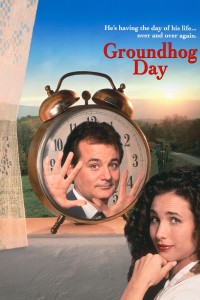
Hard to believe a cute little 1993 feel-good film about Punxsatowney Phil and Gobbler’s Knob, starring SNL alumnus Bill Murray, would be deemed by some “One of the best films of the last 40 years…” and “required viewing for the course ‘Religion, Ethics, and Film”. Still, when a spritely holiday comedy film by Harold Ramis finds itself being compared to the works of Nietzsche and Camus, you can’t help but scratch your head. Is this the result of a great story, or people reading into things because they’re holed up due to six extra weeks of winter?
A Twilight Zone style event makes an irascible weatherman relive the same day over and over again, until he’s forced to confront some important things about himself, the world around him, and what he’s living for. A great article by Justin Taylor praising the film made me relive it all over again, and we hosted a film event where I got to sift the host of commentary on the film and sprinkle in some apt scripture as it applied. If you look deep enough into this film, might it look into you? Let’s see who swerves first…
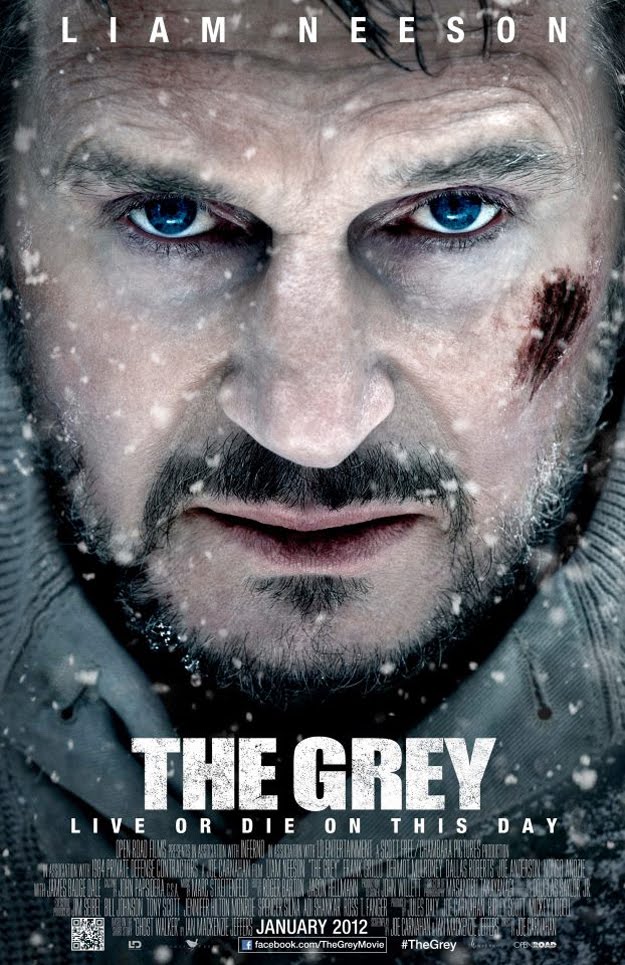 When thrust into a violent Alaskan landscape where death seems almost certain, a formerly despondent man suddenly manifests an incredible will to survive, to fight, to lead a group of men through the wilderness and combat the wolves at their heels.
Less an action film and more an essay on naturalism, on what it looks like to truly build on Bertrand Russell’s firm foundation of unyielding despair. It evokes Solomon’s lament about the similarities and differences between man and beast in Ecclesiastes 3.
The film is an incredible treatise on why we choose life and fight to survive that demands conversation with a mixed crowd. Does the ending satisfy? Why or why not? Like it’s name, The Grey doesn’t give a black and white answer and crashes that plane across the landscape of conversation. Go deeper in our short video review…
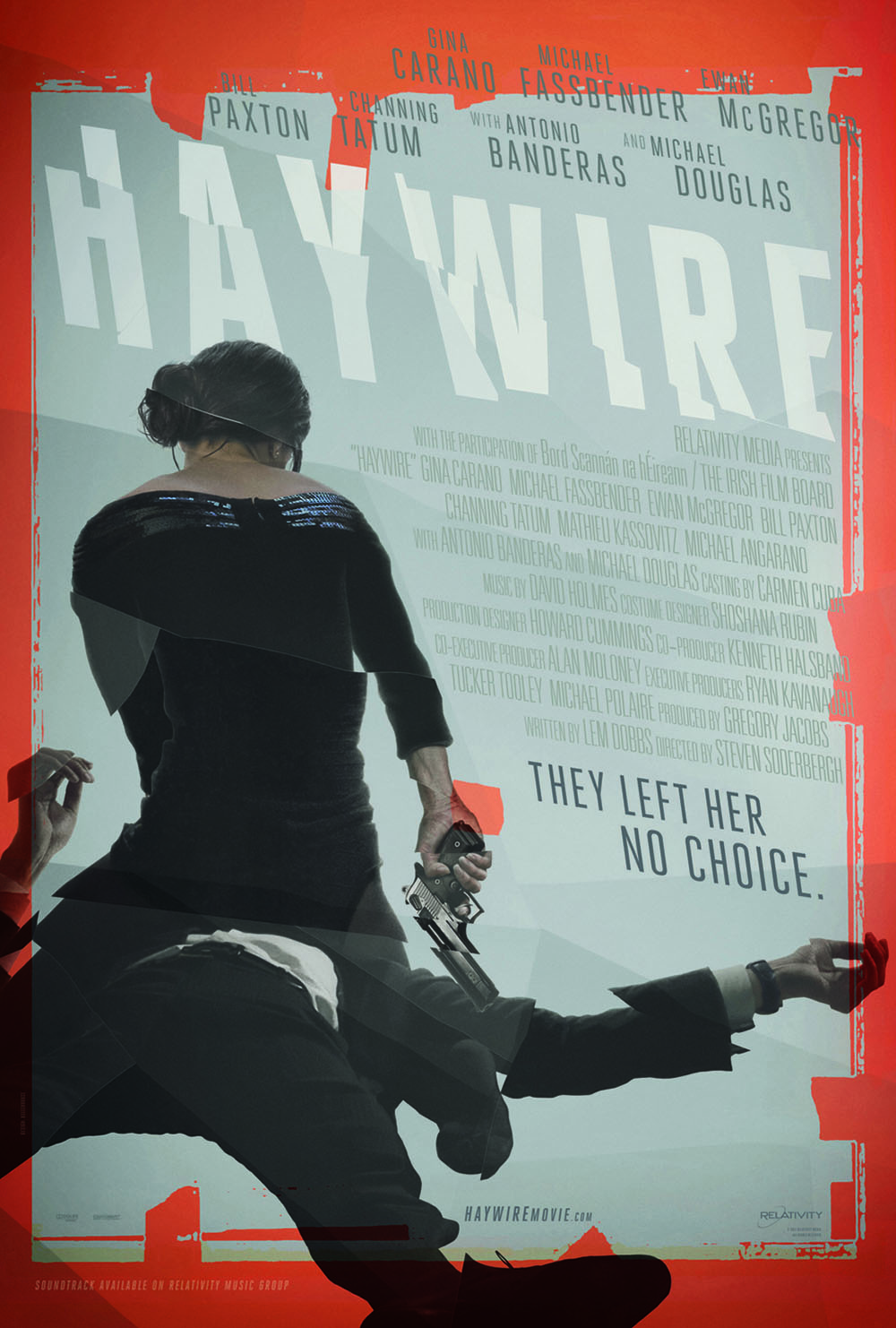 It’s no secret that Steven Soderbergh essentially just built a movie around MMA fighter Gina Carano because he caught one of her fights. While the backdrop of Haywire is seemingly a web of international intrigue, it’s actually pretty simple, and the director seems less interested in making a film so much as toying with action movie conventions, improvising like a jazz musician. It’s appropriate that the score employs various jazz tunes set during the non-fighting sequences (which have no music, and no enhanced fisticuff effects) and the music, like the movie, has moments that gel and moments that don’t.
While not a great film, it’s intriguing to watch Soderbergh riff, see the surprisingly all-star cast that surrounds Carano (Ewan McGregor, Michael Fassbender, Antonio Banderas, Bill Paxton, Michael Douglas) and realize that she stands her own in screen presence and acting chops. I’m certain we’ll see more from her.
As a black ops soldier seeking payback after being betrayed and set up, Carano plays Mallory, a woman so enigmatic she’s effectively a force of nature (albeit very human and fallible in Soderbergh’s steady hands). It’s hard to glean a lot from her stiff-lipped character in the narrative, but as we see a string of men get their comeuppance at the hands of this relentless woman, I realized there are very human reasons why they fall under her strong will, which make it intriguing as a character study less of Mallory and more of the men who misjudge her.
“You shouldn’t think of her as being a woman. That would be your first mistake.”

 “This is a new war. And it’s only beginning.”
In a film that tonally hits closer to the first Resident Evil film than it’s Underworld predecessors, Awakening serves up non-stop action and holds true to the quote above; it is undeniably fun to watch, but there isn’t much plot to chew on as it merely establishes the landscape and effectively leaves us with a cliffhanger for more.
We’ve covered the previous entries in our reviews for Underworld, Evolution, and Rise of the Lycans with the moody, provocative themes explored in the original trilogy. This fourth film introduces a new season for our protagonist, new storyline and locale in the same way a new creative team might take over a comic book or television series; it’s the same character (Selene) operating in a new environment with a tweaked style. In comparison with the other films, it succeeds as an entry of equal caliber (unlike the fourth Resident Evil) but has so much action and establishing to do it doesn’t offer much in the way of plot. Although video games now offer far more complex storylines, this one follows the classic first-person shooter scenario, even with a “boss fight” at the end, not unlike last year’s Battle: Los Angeles.
 You could choose between a leather-clad vampire or an MMA fighter to see women overturning evil government plots with guns, fists, teeth and plenty of action last weekend. This week, we’ll feature reviews of both Underworld: Awakening (Tuesday) and Haywire (Thursday).
This weekend, however, belongs entirely to Liam Neeson as he goes all Wolverine with travel-size bottles, taking on wolves and snow and, well, I guess nature itself in The Grey. Whether he’s wielding a lightsaber, ripping up Paris, training Batman or leading the A-Team, we just can’t seem to get enough of Liam Neeson kicking ass and taking names…
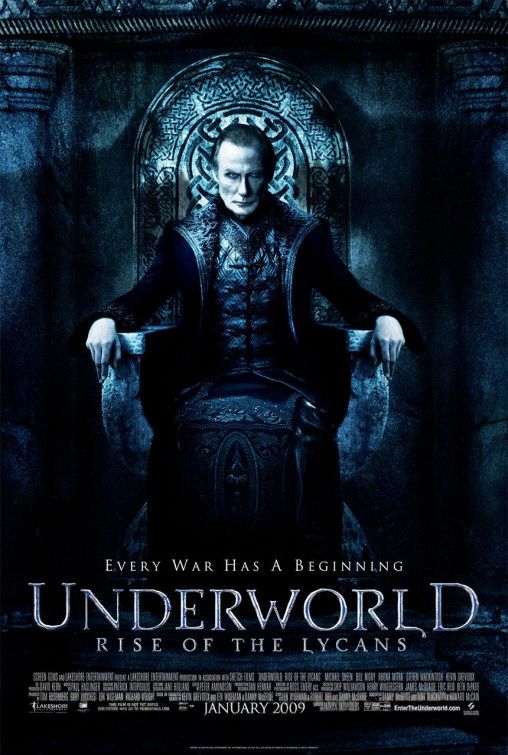 Viktor: I gave you your life.
Lucian: You gave me chains.
Viktor: I thought you would have learned by now after all these years; you cannot have one without the other.
Underworld: Rise of the Lycans may be the least liked installment of the series. Some cite the absence of Kate Beckinsale as Selene, while some might point to the change of director (first-time director Patrick Tatopoulos, best know for his F/X work on movies like Independence Day). Since the others aren’t exactly high art, I disagree; they all reside on the same popcorn playing field. Michael Sheen reprising his role as Lucian, and Bill Nighy back as Viktor, make up for the absent Beckinsale, and Rhona Mitra adequately plays Sonja, Viktor’s daughter… whose appearance would later inspire the vampire elder to sire Selene to fill the void of her loss. The two look enough alike to make this prequel work, bringing the Underworld story full circle in a medieval tale that echoes the most classic narratives of being set free by a miraculous hero. Resonance of biblical proportion abounds, from Moses to Jesus, as the enslaved Lucian rises up to liberate his people from slavery.
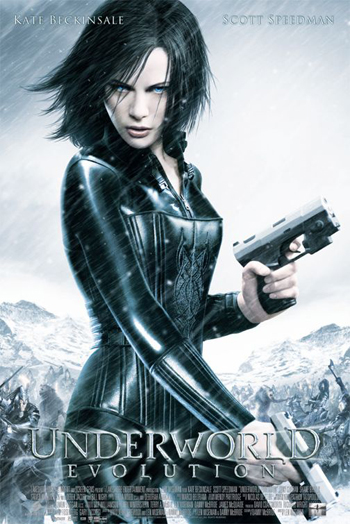 “Viktor was not the savior I had been led to believe. He had betrayed us all… My only hope now is to awaken Markus, our last remaining elder, and expose the truth…”
As we review the second film in the Underworld series, Evolution, it stands among the tightest of sequels in that, like Back to the Future II or The Two Towers, it doesn’t just extend a franchise but picks up seconds after the first film’s cliffhanger ending. It expands the theme of life, truth, and purpose being upended by stark revelations: that the leaders and fathers of this world have lied and manipulated our protagonists and pointed them in the wrong direction. Although Selene believes her “only hope” is that of another Vampire leader, it turns out Marcus holds his own deeper layers of deception and is an even worse kind of evil than Viktor.
Sibling Rivalry & Consequences
The biblical story of twins Jacob and Esau tells us of two sons jealous for birthright and dominance, one a slimmer boy who whispers deceit into his family’s ears, and the other a hairy boy who is more rash and brusque. This true narrative finds an echo in the fictional narrative of Underworld: Evolution, as the deceptive Marcus and bestial William are revealed to be the immortal sons who became the first Vampire and first Lycan, their attitudes and behaviors have wreaking generational conflict and curse. Marcus now seeks to reunite with his brother, and his plan is to create “a new race created in the image of their maker. Their new God. Me.”
 “I am a Death Dealer, sworn to destroy those known as the Lycans. Our war has waged for centuries, unseen by human eyes. But all that is about to change.”
The first Underworld film introduces us to Selene (Kate Beckinsale), a determined vampire warrior committed to her cause in light of the tragedy she understands took her family from her as a child. Her clan of vampires, however, has grown increasingly influenced by political machinations and decadence and she believes they’ve lost focus, sharp instincts and their sense of urgency. Like Worf on Star Trek who seemed to be the only real Klingon in his day, Selene seems to be one of the few who is actually dedicated to their mission. Her mentor, Viktor, resides in a century-long slumber so she has no one to turn to when she discovers a major werewolf pack and the potential return of the beasts’ long-believed dead leader, Lucien.
A human named Michael is drawn into the conflict, the ignorant character who realizes a war has been going on under his feet and is forced onto the Lycans’ side with a seemingly decisive bite. Selene finds herself protecting Michael and, piece by piece, everything she believed in is turned on its head. She realizes vampires within her midst have sold out their own people, enemies she believed were animals were actually the originally wronged parties, and the now-wakened Viktor, her surrogate father, has kept the gravest of secrets from her…
 In a post-Matrix 2003, characters in leather and longcoats shot and fought it out in a subway with slow-motion intensity. While these cinematic battles weren’t uncommon after the Wachowski brothers had Neo set a visual trend in 1999, Underworld added a new wrinkle… as we found out the black-clad goth characters were actually vampires and werewolves caught in a centuries-old feud. (To be fair, Blade the vampire hunter actually preceded The Matrix by a year in setting some of this “leaping-leather” visual style, so although Keanu Reeves mainstreamed the action eye-candy, a vampire movie actually established the look and even bullet-time. The first Underworld film continued Wesley Snipes’ toothy style (and expanded on it) by adding a gothic backdrop and a hairy love story. Also, 2003 positioned this story of Lycans versus Vamps–with a “forbidden romance” in the middle–two full years before a little-known book about Edward and Bella would rock the world, “eclipse” book sales and bore us with roll-eye cinema.
Team Victor or Team Lucien, anyone?
Now it’s 2012, and vampires are everywhere in books, film and television. It’s not surprising, then to see that the death-dealing Vampire Seline is back for Underworld: Awakening…