
Category: text reviews
“You don’t believe in ghosts, do you?”
 The Woman in Black has been a book, a play, and a 1989 film prior to the most recent incarnation in the 2012 film starring Daniel Radcliffe. Each time the query and frightening prospect remain the same: what if we linger after death, our unresolved issues lingering in our ghostly soul, creating ghastly results for those left behind? This notion, of the spectral spirit that brings death, is what Arthur Kipps (Radcliffe) encounters when he visits a remote village on business.

Dealing with Loss
A young man, in an understated yet appropriate performance for a post-Potter Radcliffe, Kipps is haunted already by the death of his wife and with mixed feelings for the son she left behind. Adding more loss, with a dead woman and endangered children, the situation makes him confront his own feelings and fears about death and coping with loss. People who have suffered the death of loved ones show the viewer the range of human emotions, from stoic to withdrawn, from irritable to irrational.
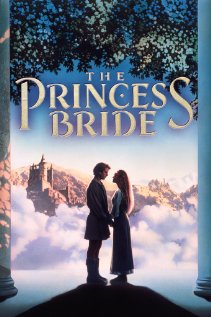 I asked our readers what I should watch (and review) for Valentine’s Day, and The Princess Bride was suggested. Some people in my college dorm watched the film back in 1991 ad nauseum and put a bad taste in my mouth for this 1987 Rob Reiner movie, but the reality remains that the fanciful film is an enduring classic for men and women, boys and girls of all ages in all ages. Examining the narrative, is it any wonder why?
“It was the book my father used to read to me when I was sick, and I used to read it to your father. And today I’m gonna read it to you.”
As the story opens with a jaded, video-game playing grandson irritated by his grandpa’s visit, the romantic notion that there is a story told by father to son, generation to generation, one being passed down that is about “true love” either makes us roll our eyes or warms our heart. Would that there might be a story worth teaching “diligently to your children, and shall talk of them when you sit in your house, and when you walk by the way, and when you lie down, and when you rise” – Deuteronomy 6. Maybe it might even be a story that, as the grandfather promises, contains “fighting, torture, revenge, giants, monsters, chases, escapes, true love, miracles…”
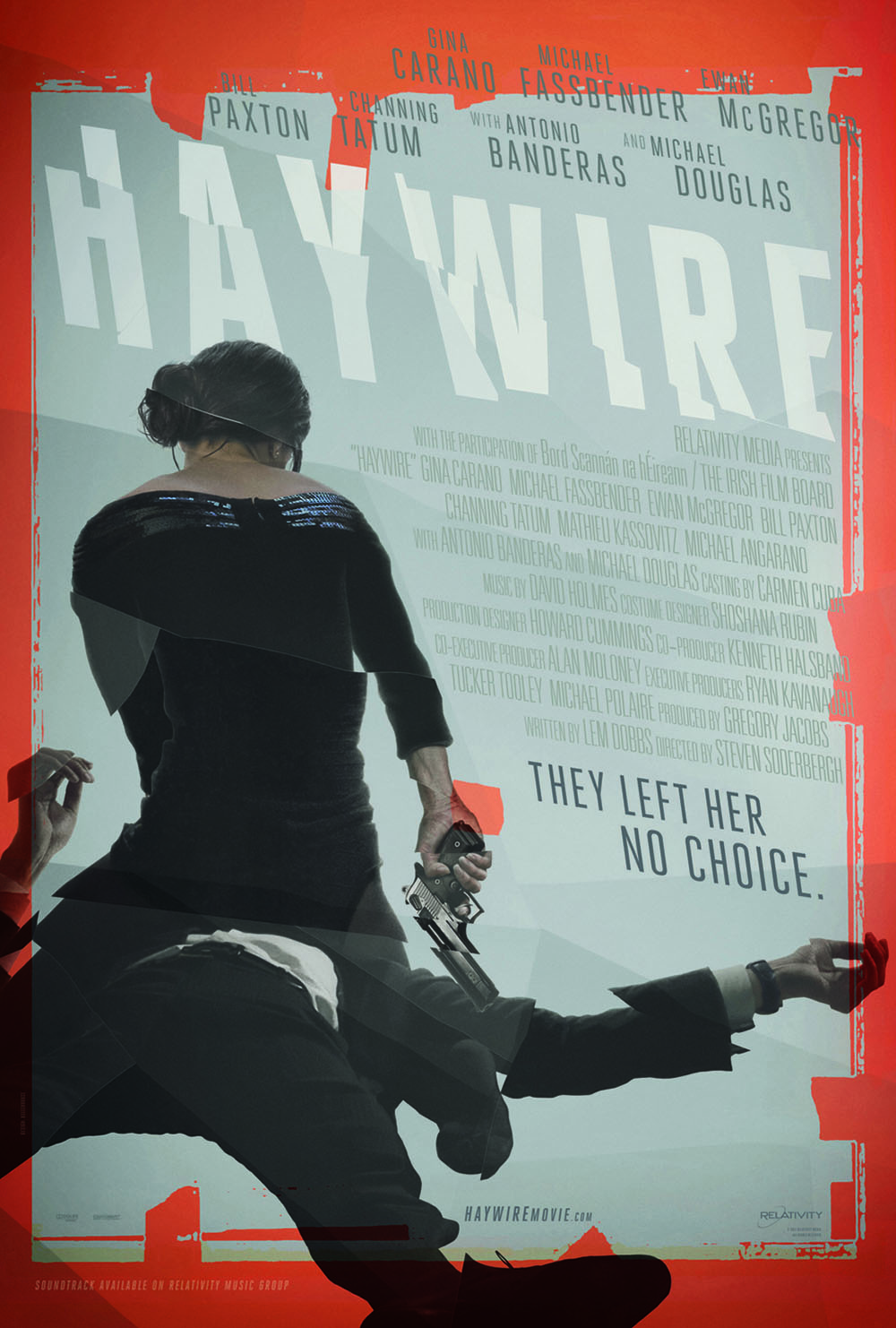 It’s no secret that Steven Soderbergh essentially just built a movie around MMA fighter Gina Carano because he caught one of her fights. While the backdrop of Haywire is seemingly a web of international intrigue, it’s actually pretty simple, and the director seems less interested in making a film so much as toying with action movie conventions, improvising like a jazz musician. It’s appropriate that the score employs various jazz tunes set during the non-fighting sequences (which have no music, and no enhanced fisticuff effects) and the music, like the movie, has moments that gel and moments that don’t.
While not a great film, it’s intriguing to watch Soderbergh riff, see the surprisingly all-star cast that surrounds Carano (Ewan McGregor, Michael Fassbender, Antonio Banderas, Bill Paxton, Michael Douglas) and realize that she stands her own in screen presence and acting chops. I’m certain we’ll see more from her.
As a black ops soldier seeking payback after being betrayed and set up, Carano plays Mallory, a woman so enigmatic she’s effectively a force of nature (albeit very human and fallible in Soderbergh’s steady hands). It’s hard to glean a lot from her stiff-lipped character in the narrative, but as we see a string of men get their comeuppance at the hands of this relentless woman, I realized there are very human reasons why they fall under her strong will, which make it intriguing as a character study less of Mallory and more of the men who misjudge her.
“You shouldn’t think of her as being a woman. That would be your first mistake.”

 “This is a new war. And it’s only beginning.”
In a film that tonally hits closer to the first Resident Evil film than it’s Underworld predecessors, Awakening serves up non-stop action and holds true to the quote above; it is undeniably fun to watch, but there isn’t much plot to chew on as it merely establishes the landscape and effectively leaves us with a cliffhanger for more.
We’ve covered the previous entries in our reviews for Underworld, Evolution, and Rise of the Lycans with the moody, provocative themes explored in the original trilogy. This fourth film introduces a new season for our protagonist, new storyline and locale in the same way a new creative team might take over a comic book or television series; it’s the same character (Selene) operating in a new environment with a tweaked style. In comparison with the other films, it succeeds as an entry of equal caliber (unlike the fourth Resident Evil) but has so much action and establishing to do it doesn’t offer much in the way of plot. Although video games now offer far more complex storylines, this one follows the classic first-person shooter scenario, even with a “boss fight” at the end, not unlike last year’s Battle: Los Angeles.
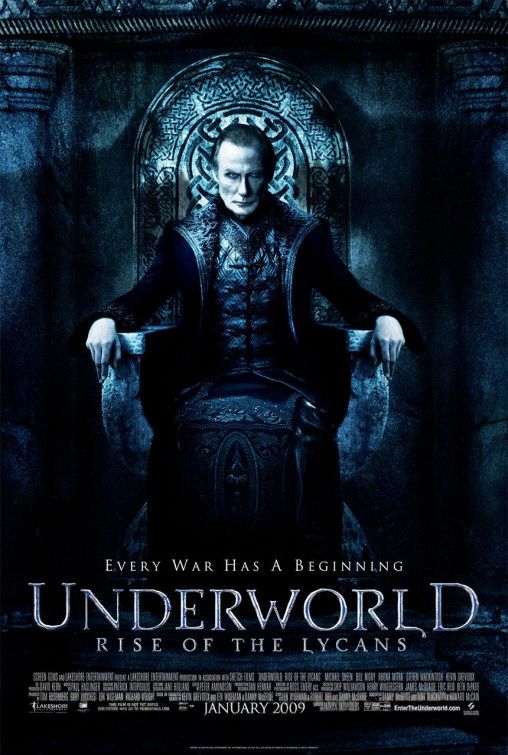 Viktor: I gave you your life.
Lucian: You gave me chains.
Viktor: I thought you would have learned by now after all these years; you cannot have one without the other.
Underworld: Rise of the Lycans may be the least liked installment of the series. Some cite the absence of Kate Beckinsale as Selene, while some might point to the change of director (first-time director Patrick Tatopoulos, best know for his F/X work on movies like Independence Day). Since the others aren’t exactly high art, I disagree; they all reside on the same popcorn playing field. Michael Sheen reprising his role as Lucian, and Bill Nighy back as Viktor, make up for the absent Beckinsale, and Rhona Mitra adequately plays Sonja, Viktor’s daughter… whose appearance would later inspire the vampire elder to sire Selene to fill the void of her loss. The two look enough alike to make this prequel work, bringing the Underworld story full circle in a medieval tale that echoes the most classic narratives of being set free by a miraculous hero. Resonance of biblical proportion abounds, from Moses to Jesus, as the enslaved Lucian rises up to liberate his people from slavery.
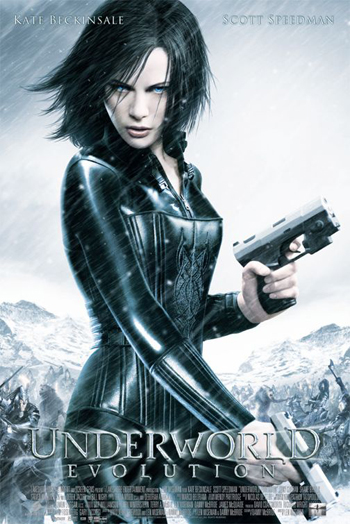 “Viktor was not the savior I had been led to believe. He had betrayed us all… My only hope now is to awaken Markus, our last remaining elder, and expose the truth…”
As we review the second film in the Underworld series, Evolution, it stands among the tightest of sequels in that, like Back to the Future II or The Two Towers, it doesn’t just extend a franchise but picks up seconds after the first film’s cliffhanger ending. It expands the theme of life, truth, and purpose being upended by stark revelations: that the leaders and fathers of this world have lied and manipulated our protagonists and pointed them in the wrong direction. Although Selene believes her “only hope” is that of another Vampire leader, it turns out Marcus holds his own deeper layers of deception and is an even worse kind of evil than Viktor.
Sibling Rivalry & Consequences
The biblical story of twins Jacob and Esau tells us of two sons jealous for birthright and dominance, one a slimmer boy who whispers deceit into his family’s ears, and the other a hairy boy who is more rash and brusque. This true narrative finds an echo in the fictional narrative of Underworld: Evolution, as the deceptive Marcus and bestial William are revealed to be the immortal sons who became the first Vampire and first Lycan, their attitudes and behaviors have wreaking generational conflict and curse. Marcus now seeks to reunite with his brother, and his plan is to create “a new race created in the image of their maker. Their new God. Me.”
 “I am a Death Dealer, sworn to destroy those known as the Lycans. Our war has waged for centuries, unseen by human eyes. But all that is about to change.”
The first Underworld film introduces us to Selene (Kate Beckinsale), a determined vampire warrior committed to her cause in light of the tragedy she understands took her family from her as a child. Her clan of vampires, however, has grown increasingly influenced by political machinations and decadence and she believes they’ve lost focus, sharp instincts and their sense of urgency. Like Worf on Star Trek who seemed to be the only real Klingon in his day, Selene seems to be one of the few who is actually dedicated to their mission. Her mentor, Viktor, resides in a century-long slumber so she has no one to turn to when she discovers a major werewolf pack and the potential return of the beasts’ long-believed dead leader, Lucien.
A human named Michael is drawn into the conflict, the ignorant character who realizes a war has been going on under his feet and is forced onto the Lycans’ side with a seemingly decisive bite. Selene finds herself protecting Michael and, piece by piece, everything she believed in is turned on its head. She realizes vampires within her midst have sold out their own people, enemies she believed were animals were actually the originally wronged parties, and the now-wakened Viktor, her surrogate father, has kept the gravest of secrets from her…

 …my true love gave to me: HOPE and a HELPER SUITABLE.
“My dearest friend, if you don’t mind… I’d like to join you by your side…”
The Nightmare Before Christmas stands fully unwrapped as we discuss the finale in our last part of this review (just joining us? Start HERE). The Pumpkin King of Halloweentown has had his world turned upside down, falling in love with Christmastown and yearning for that bright world, but going too far, rushing to recreate it without the proper equipping and thinking he could be be the master of Christmas instead of simply enjoying it forever.
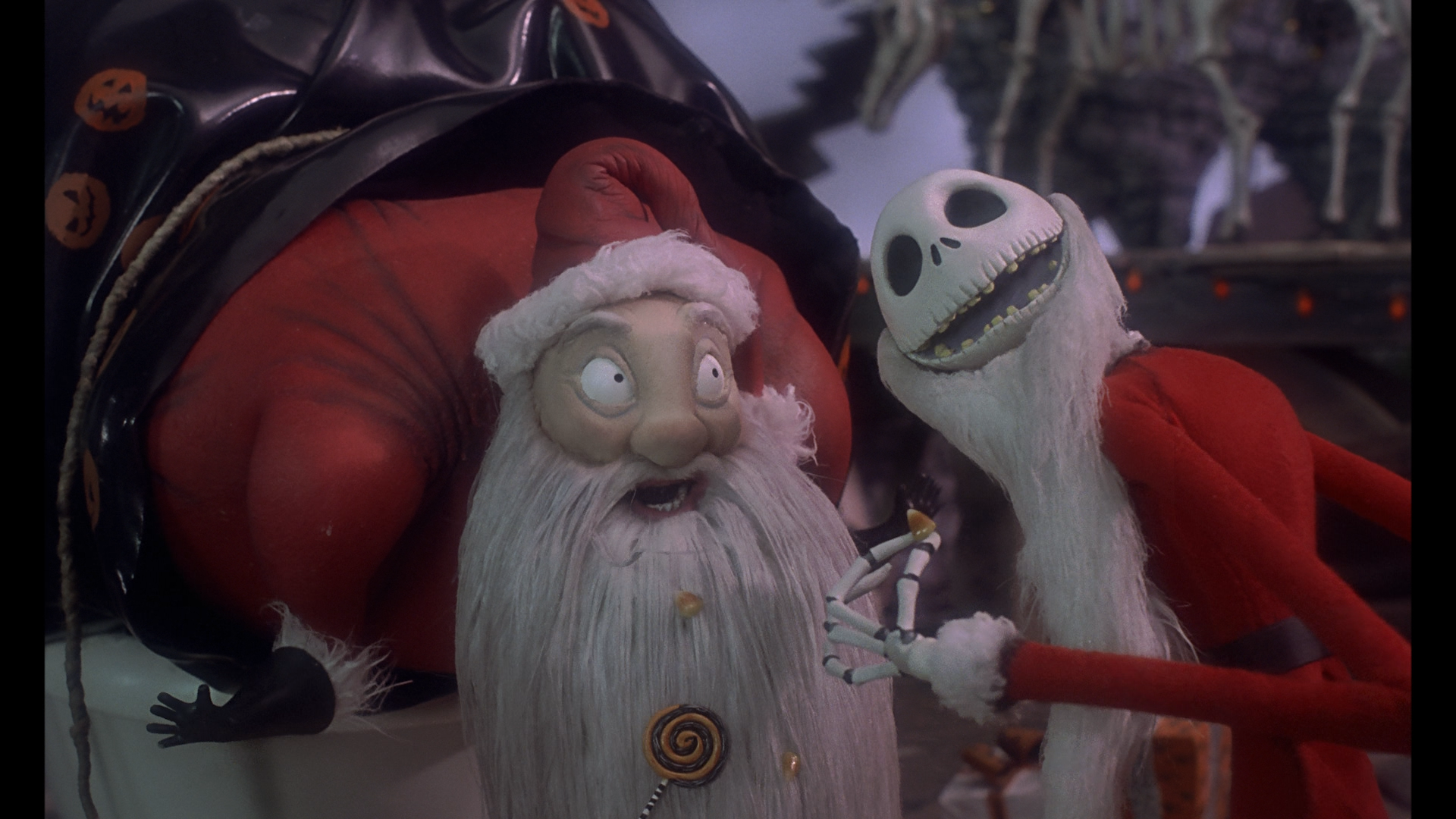
 …my true love gave to me: UNCHANGEABLE NATURE?
“What have I done? What have I done? How could I be so blind? All is lost, where was I? Spoiled all… spoiled all; everything’s gone all wrong.”
Edward Scissorhands can’t adapt to sunny suburbia and is exiled to his grey castle. Catwoman can’t reconcile her issues and live happily every after in Batman Returns (and the sewer-raised circus freak Penguin just doesn’t fit in the world above either, let alone Keaton’s tormented Bruce Wayne). Sweeney Todd’s inflexible darkness inevitably consumes everything he loves, and himself. A familiar theme in several of Tim Burton’s films seems to be: you cannot change who you are. It’s no wonder he’s aiming next at the melancholy Dark Shadows.