
Category: cinema reviews
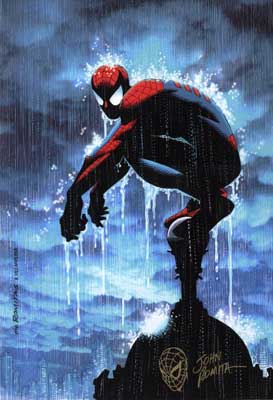 As mentioned in our last post, Hollywood is determined to keep Spider-man swinging strong in the new film out this summer. I uncovered an audio review for my favorite flick in the franchise, Spider-man 2 (and I’m far from alone in that assessment) and not just because my favorite Spidey villain was always Doctor Octopus. Part 1 dealt more generically with the comic book character, so here is part 2 (which assumes you’ve seen the 2004 film and contains spoilers).
What the film tackles brilliantly is the primary characters and how ALL of them – protagonist and antagonist, and those inbetween – operate out of some form of obsession. We also pit Peter Parker’s axiom and claim to “responsibility” against the fullness of his actions, and discuss the unstable foundation of guilt that actually spurs him on. Lastly, the poster campaign proclaimed this film would deal with three particular concepts…
 In June, The Amazing Spider-man will swing into theaters, take us on a high rise ride over an IMAX-sized city and even kick us in the face straight through our 3D glasses. Personally, I’m excited for the fresh take on our friendly neighborhood wall-crawler, and don’t even mind the gimmicky format. My 3 reasons?
- If any hero seemed suited for 3D, it’s the web-swinging Peter Parker. (Classic artist John Romita practically drew him EXPLODING off the page into your face.)
- I’m happy just to have something to wash the taste of that third movie out of my mouth, something that ISN’T a musical with songs by Bono. In both cases, we know that Spider-man should swing, not dance.
- Finally, I can’t deny I love Denis Leary, who has a prominent role as Gwen Stacy’s father and the police captain chasing our misunderstood web-head. If you haven’t seen the most recent trailer, check it out.
What’s so special about Spider-man anyway?

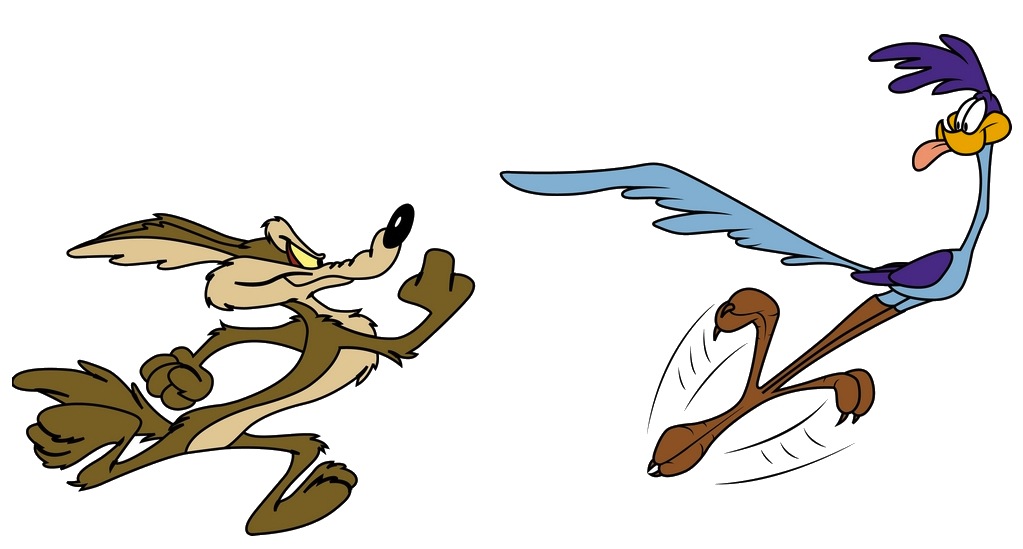 I grew up on Looney Tunes, but my favorite – by far – were the ones featuring the Wile E. Coyote and the Road Runner. Now that several decades have passed, having witnessed the 575th anvil fall on the head of poor Carnivorous Vulgarus and the 963rd rock crush his emaciated canine body, I had to ask myself: why do we like these Looney Tunes – and particularly this one – so much? Why has he endured (particularly with so many concussions and bodily trauma)?
If you’ve never seen an episode, you can check out the classic “Fast and Furryous” (NOT a film with Vin Diesel) HERE.
“It couldn’t be any worse than the first one,” I convinced myself… and am reminded sharply that I shouldn’t always listen to that voice in my head. Ghost Rider: Spirit of Vengeance was an artistic nightmare that fails on almost EVERY level… yet surprisingly hits three biblical truths…
 One of my favorite films of 2011, J.J. Abrams’ flashback/homage to the classic works of Spielberg taps into 4 essential components of his filmmaker’s late 70s to early 80s films:
- panoramic, storybook skylines
- extraterrestrials disrupting suburban, middle-class life
- relational struggles between parent/child
- excessive use of lens flare
You can just feel the entire film is a narrative expression of J.J. looking at Steven saying “I love you man!” However, the film isn’t just your typical, monster/alien-incursion-forces-coming-of-age-story…
“You don’t believe in ghosts, do you?”
 The Woman in Black has been a book, a play, and a 1989 film prior to the most recent incarnation in the 2012 film starring Daniel Radcliffe. Each time the query and frightening prospect remain the same: what if we linger after death, our unresolved issues lingering in our ghostly soul, creating ghastly results for those left behind? This notion, of the spectral spirit that brings death, is what Arthur Kipps (Radcliffe) encounters when he visits a remote village on business.

Dealing with Loss
A young man, in an understated yet appropriate performance for a post-Potter Radcliffe, Kipps is haunted already by the death of his wife and with mixed feelings for the son she left behind. Adding more loss, with a dead woman and endangered children, the situation makes him confront his own feelings and fears about death and coping with loss. People who have suffered the death of loved ones show the viewer the range of human emotions, from stoic to withdrawn, from irritable to irrational.
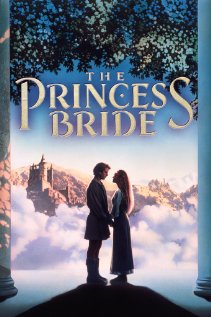 I asked our readers what I should watch (and review) for Valentine’s Day, and The Princess Bride was suggested. Some people in my college dorm watched the film back in 1991 ad nauseum and put a bad taste in my mouth for this 1987 Rob Reiner movie, but the reality remains that the fanciful film is an enduring classic for men and women, boys and girls of all ages in all ages. Examining the narrative, is it any wonder why?
“It was the book my father used to read to me when I was sick, and I used to read it to your father. And today I’m gonna read it to you.”
As the story opens with a jaded, video-game playing grandson irritated by his grandpa’s visit, the romantic notion that there is a story told by father to son, generation to generation, one being passed down that is about “true love” either makes us roll our eyes or warms our heart. Would that there might be a story worth teaching “diligently to your children, and shall talk of them when you sit in your house, and when you walk by the way, and when you lie down, and when you rise” – Deuteronomy 6. Maybe it might even be a story that, as the grandfather promises, contains “fighting, torture, revenge, giants, monsters, chases, escapes, true love, miracles…”
“You’re never going to get these people to see themselves as they really are, ’cause it’s the lies that we tell ourselves… they introduce us to him.”
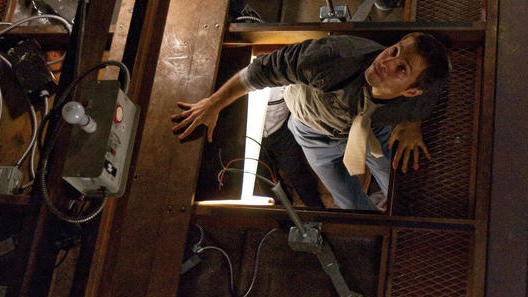 Is a movie called Devil automatically evil? Can it actually provoke conversation about his existence, and God’s ultimate authority and triumph over his schemes? In our first post about this film, we featured a segment on scary movies more generally, and how they play an important part in storytelling. Now we dig in deeper to this particular film with the second segment, which is best listened to after you’ve seen the film and contains spoilers…
 Is the Devil real? Does he have power over us? A PG-13 film that captures the spirit of old stories like The Twilight Zone, Devil (directed by John Erick Dowdle) explores the terrifying possibilities of the world we don’t see. The film opens with 1 Peter 5:8 scrawled on the screen – “Your enemy the devil prowls around like a roaring lion looking for someone to devour” – and thus the movie’s narrative begs for discussion.
Why do we watch these movies???
The first leg of this 2-part audio podcast features less on the 2010 film and more on why you, me, or anyone goes in for scary movies at all and most particularly movies dealing with Old Nick, Old Scratch, Lucifer, the Accuser himself: the devil. Some would say even speaking about films like these, let alone watching them, let alone making them, is inherently evil. However, if we take an informed view of storytelling and the place of the horror story in an oft-horrific world, we might find we’re missing something very important about both the genre and ourselves.
Take a spin down scary storytelling 101 – if you dare. I promise no black cats will jump out of the cupboard, and there are no demons embedded in the mp3. I also have a little fun at M. Night Shyamalan’s expense, so beware of bad puns…