
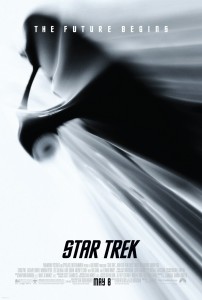
 It’s about time I talked about the hottest ticket this summer. But first (as the film itself does) let’s take a trip back in time…
The Starship Enterprise had already been trekking for several years before I was born. My science-fiction loving dad would stun me with syndicated episodes during my impressionable youth, forever inflecting me with a staccato speech some deem wholly Shatnerian. Although I was literally a next generation Star Trek fan, I was not a Next Generation devotee. I was always a troubled (and tribbled) TOS boy. I did go for the ride on NCC-1701-D and dabbled in Deep Space 9, but I vanished for Voyager, and never entertained Enterprise. For me, Star Trek would always quintessentially be about Kirk, Spock and McCoy.
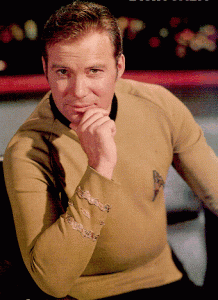 A lot of people were petrified that another actor might play James Tiberius Kirk (and Spock, etc.) but — as much as I slavishly follow the unparalleled acting prowess and endless entertaining powers of The Shat (seriously, I have his two albums, and now have a copy of White Comanche) — I welcomed the transcendence another actor would bring to the role. In fact, I think such a transition is essential… for anyone who truly loves the character.
Think about it… how many actors have played Sherlock Holmes? Dracula? James Bond? Tarzan? Zorro? Batman? Let’s face facts: most fictional characters will fade away, locked to particular time, place, or person unless they transcend the original medium and/or the original actor. Perhaps, sometimes, that’s okay. Maybe Clint Eastwood WAS Dirty Harry, and the character doesn’t need to transcend the 80s. But what of Indiana Jones? I love the idea of Indy more than just Harrison Ford. To think the once-great actor will take the adventurer’s hat with him into the grave is just as chilling as the bad casting that might equally ruin him. Still, let’s remember – Batman survived George Clooney. Anything is possible. As an awkward Arnold spoke flatly in that horrific Shumacher debacle: “chill out”.
 No matter how much we fear the remake, reboot, or re-imagining (somewhere, Charleton Heston is still shaking his fist at a statue of liberty-sized Tim Burton), these transitions are the defining moment when a fictional character might truly become mythical. And… although many thought they might leave the theater with upraised fist screaming “Abrams” as loudly as Trekkers holler “KHAAAAAAAN!” he has successfully transported the cast and crew of the original starship enterprise from Shatner and the 60s to multi-generational myth. The film succeeds on a number of levels that we’ll discuss in an upcoming audio review.
Admittedly, the film focuses less on Roddenberry’s broad, “enlightened” vision of the future, and more on the timeless narrative dynamic amongst the bridge crew… specifically the trio of Kirk, Spock and McCoy. I remember once, at a Trek convention, Shatner described the original character dynamic as superior to subsequent Treks, because of a quality he described as essentially mythical. While other Trek offerings redistributed character traits and employed similar relational facets (Spock to Data, for instance) they were ultimately dilutions of this perfect chemistry Roddenberry instilled in his primary trio.
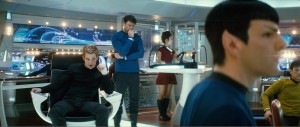 The friction and friendship between the daring Kirk, reasonable Spock, and curmudgeon McCoy wasn’t just about human interaction, it was an exploration of the human psyche. While their archetypes don’t perfectly mirror the famous Freudian id/ego/superego, this “Roddenberry trinity” explored the narcissistic optimism (Kirk), cold, hard logic (Spock), and grumbling pessimism (McCoy) that often wrestles for dominance in our own minds, as well as amidst our circle of friends and co-workers. While sometimes they were dysfunctional, other times each component was essential for them to prevail. The classic Trek usually explored this dynamic more deeply and powerfully than the “strange new worlds”. This “triune interplay” was critical to the story, and without it the individuals were not whole.
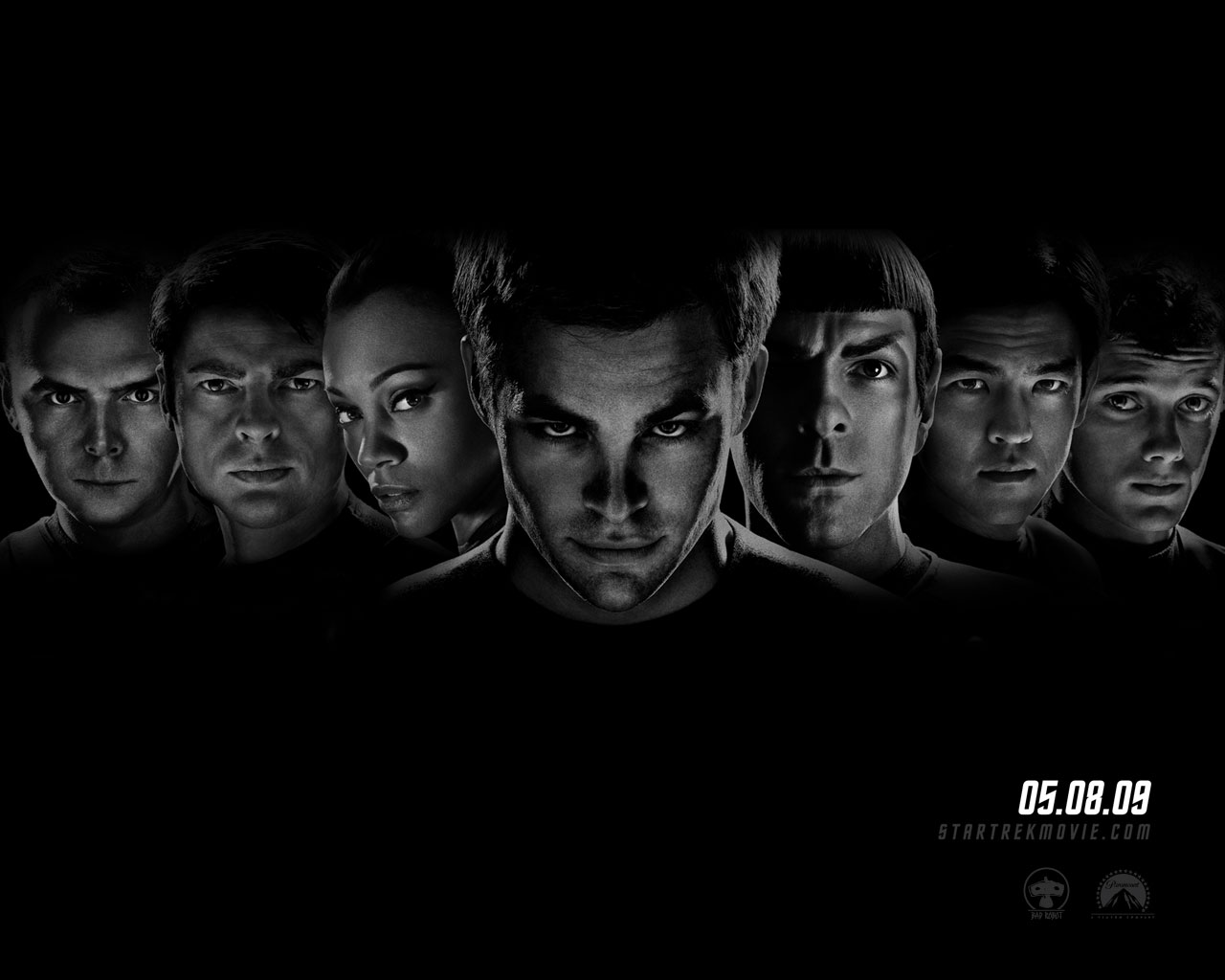
I could make some horrible contrast here with the Christian Trinity – Father, Son, and Holy Spirit – but it would be silly at best (and heretical at worst). It’s curious, however, that this teamworking notion – that we are inherently relational beings, created to image a God who is relational within his oneness – is a deep truth embodied by the three main characters and further solidified by the cast of seven. Kirk without Spock is like Frodo without Sam, and without the crew of the Enterprise they are like hobbits bereft of the Fellowship. It’s this narrative hinge upon which Star Trek swings, and in the new film this remains at full power, shooting down criticism unerringly despite the big and small changes wrought by J.J. Abrams (on what some feel is virtually a “sacred” franchise).
In the next installment, we’ll look at the eternal truths of Trek, revealing how and why the classic Trek WAS updated to reflect current issues, how it reflects a sense of calling and destiny, the deeper devotion of fans that call Star Trek “canon”, and the classic idea of “made families” that the film furthers. Set phasers on AWESOME.
Fun question #1: where does a tribble appear in the new Star Trek movie?
Good to have Cinemagogue back!
Yes, Clint Eastwood *is* Dirty Harry and I would shudder at the thought of any modern actor strapping on a .44 Magnum and donning the brown suit. Except for maybe Viggo Mortensen… I’d pay to see that. Only if it was directed by David Cronenberg, though.
For those interested in the DVD release and Trek in general, this is a good interview with Abrams http://www.collider.com/2009/10/14/director-j-j-abrams-interview-star-trek-dvd-talks-about-deleted-scenes/
I quite seriously hold that Spock, Kirk, and McCoy embody the same kind of mind/body/spirit trio that Craig McCracken deliberately mapped out in Blossom, Buttercup, and Bubbles in the Powerpuff Girls. I agree with the id/ego/superego analogy for the original Trek trio. Together they presented a fully orbed human experience.
For me the only series in the whole franchise that is still winsome is the original series. As I often say, you can’t beat Spock vs evil sentient flying pancakes that sound like dog squeaker toys. And you literally can’t beat ripped-shirt Kirk, can you? Looking forward to the next installments on this. 🙂
I’m glad to see your desire to address the “destiny” or “fate” themes in the movie. I was really fascinated by how blatant this theme was considering the reputation of the franchise for minimizing “spiritual” realities, even if they’re as vague as destiny. What puzzled me about the movie is that one character seems to be an example of choosing your own destiny (Spock serving in Star Fleet) while another seems to demonstrate that you can’t run from what’s chosen for you (Kirk commanding the Enterprise).
Can’t wait to see what you think!
Oh! and if I’m not mistake the Tribble appears in the background of the first scene featuring Scotty.
I was always a huge fan of the Shat’s wanton disregard for the Prime Directive. Picard was always harping on about it, but Kirk seemed to prefer fixing problems by snogging alien women and fighting everyone else. Awesome. Totally cool that in Generations Picard fell short but Kirk overcame the villain.
[…] Best Picture – Star Trek (sorry Hurt Locker, but the reboot of this film was light years […]